

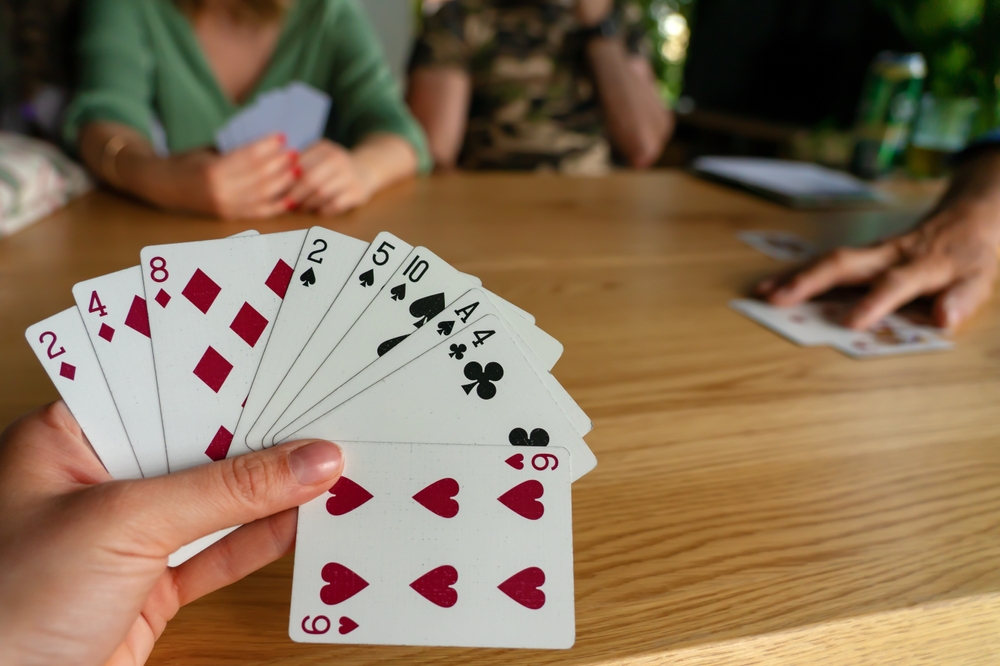
In an era dominated by digital screens, virtual reality, and algorithmic social feeds, the simple act of gathering around a physical table remains one of the most resilient forms of human connection. While video games offer immersive graphics and global connectivity, they often lack the tangible, face-to-face intimacy that defines real-world socialization. This is where multiplayer card games step in. For centuries, a simple deck of structured cards has served as a social catalyst, transforming a room of quiet individuals into a lively hub of laughter, friendly rivalry, and deep conversation.
The beauty of card games lies in their accessibility and mechanical diversity. Unlike complex board games that require hours of setup, massive table space, and thick rulebooks, card games are inherently portable and elegant. They strip away the clutter, forcing players to look at each other, read facial expressions, interpret body language, and engage in verbal banter. Whether through the calculated teamwork of trick-taking games, the chaotic hilarity of party decks, or the strategic depth of modern hobby card games, these tabletop experiences create shared memories and strengthen social bonds across generations.
The Psychology of Shared Play Around the Table
To understand why card games are so effective at bridging social gaps, one must look at the psychological mechanics of shared play. When individuals sit down together to play a game, they establish what sociologists call a magic circle. Inside this temporary reality, everyday social hierarchies, anxieties, and distractions melt away. A corporate executive, a college student, and a grandparent all meet on a perfectly level playing field, governed by the exact same set of rules.
Card games also strike a unique balance between cognitive engagement and social downtime. Unlike intensive strategic simulations that require total silence and concentration, most card games feature a rhythmic flow of dealing, playing, and shuffling. These natural intervals provide the perfect canvas for casual conversation, updates on personal lives, and spontaneous jokes. The game provides a structured focal point, which paradoxically takes the pressure off social interaction, making it incredibly easy for introverted or unfamiliar people to connect naturally.
Classic Trick-Taking Games: The Pioneers of Partnership
Long before modern board game cafes existed, traditional trick-taking games were the cornerstone of community entertainment. These games rely on a standard fifty-two-card deck and a mechanical loop where players take turns playing cards, and the highest card wins the round or trick. What makes many of these classics so socially powerful is their heavy reliance on partnerships.
Spades
Originating in the United States in the 1930s, Spades is a game deeply rooted in communication and mutual trust. Played in fixed pairs, the core of the game revolves around bidding, where partners must predict exactly how many tricks they will win before the round begins. Because explicit signaling or talking about your hand is strictly forbidden, partners must develop an unspoken psychological rhythm. Over time, frequent Spades partners learn to read each other’s minor card choices like an intricate language, making a successful, high-stakes bid feel like a monumental joint achievement.
Euchre
Particularly popular in the American Midwest and parts of Canada, Euchre is a fast-paced, high-energy partnership game that uses a stripped-down deck of just twenty-four cards. Because the deck is so small and hands are short, the game moves at a breakneck speed. This rapid rotation creates an environment of constant shifting fortunes, where a single risky play can completely upend the score. Euchre is historically notorious for inducing playful trash-talk, boisterous celebrations, and deep community bonding in local pubs and family living rooms alike.
Bridge
For those seeking the ultimate intellectual challenge, Bridge stands as the pinnacle of trick-taking depth. Requiring intricate bidding systems and meticulous memory tracking, Bridge is often played in dedicated clubs and leagues. It serves as a profound social tool for older generations and analytical minds, offering a lifelong pursuit of strategic mastery that keeps the brain sharp while fostering deeply loyal, long-term partnerships.
Modern Party Card Games: Breaking the Ice and Sparking Laughter
While classic card games lean heavily on math and strategy, the modern board game renaissance has birthed an entirely new genre: the party card game. These games are designed with one primary goal in mind: to break down social walls, maximize player counts, and generate immediate, uninhibited laughter. They require virtually zero mechanical skill, making them the ultimate equalizer for gatherings where guests do not know each other well.
-
Codenames: This game divides players into two teams, with one spymaster on each side trying to guide their teammates to guess specific words on a grid using single-word clues. Codenames forces players to tap into shared jokes, cultural references, and the unique way their friends’ brains work, often resulting in hilarious misunderstandings.
-
Exploding Kittens: Driven by a quirky, high-stakes Russian Roulette mechanic, this game keeps everyone on the edge of their seat. Players draw cards until someone pulls an exploding kitten, eliminated them from the game unless they have a defusal card. It is fast, chaotic, and perfect for casual parties.
-
Dixit: A beautifully artistic game where players use abstract, dreamlike illustrated cards to tell cryptic stories or give vague clues. Dixit moves away from competitive aggression, appealing instead to creativity, empathy, and how well you can understand the visual imagination of your fellow players.
Casual Strategy and Hobby Card Games: Casual Depth for Tight-Knit Groups
Between the intense intellectual weight of Bridge and the pure chaos of party games lies the sweet spot of casual strategy card games. These titles are ideal for small groups of friends or families who want a satisfying mechanical challenge without the game taking over the entire evening. They offer rich themes and strategic choices while maintaining a highly conversational atmosphere.
Bohnanza
Designed by Uwe Rosenberg, Bohnanza is a brilliant card game about, of all things, bean farming. The core mechanic that drives the entire game is trading. Players are frequently forced to trade away cards they cannot plant, meaning you cannot win Bohnanza by playing in a isolated bubble. To succeed, you must constantly negotiate, make deals, offer favors, and compromise with your opponents. This constant economic bartering turns the table into a lively marketplace of deals, laughter, and lighthearted betrayals.
Sushi Go Party
A delightful card-drafting game where players pass hands of cards around the table, selecting one item at a time to build the most valuable combination of sushi dishes. The drafting mechanic means you are always hyper-aware of what the person next to you is collecting, creating a gentle, interactive tension as you try to snatch up the exact pudding or sashimi card your friend desperately needs to finish their set.
Cooperative Card Games: Standing Together Against the System
In recent years, the tabletop industry has seen a massive surge in the popularity of cooperative card games. Instead of competing against one another, every player at the table joins forces to defeat an automated game system. This structural shift completely changes the social dynamic of the room, replacing defensive secrecy with open collaboration, collective brainstorming, and shared vulnerability.
The Mind
The Mind is less of a game and more of a fascinating psychological experiment. Players hold a hand of cards numbered one through one hundred, and they must collectively discard them in ascending order into a central pile. The catch is that players are completely forbidden from communicating in any way—no talking, no gesturing, and no secret codes. The group must align their internal sense of time and rhythm, staring into each other’s eyes to determine exactly when to play a card. When a team successfully navigates a high level without a single mistake, the collective explosion of relief and triumph is unmatched by almost any competitive game.
Crew: Mission Deep Sea
A cooperative spin on the traditional trick-taking genre. Players act as a submarine crew executing specific, highly restrictive missions across a vast campaign. Because players cannot openly discuss the specific cards in their hands, they must use limited radio tokens to signal their tactical intent. It requires deep empathy and the ability to look at the board from your teammate’s perspective, turning every successfully completed mission into a deeply satisfying victory for the whole group.
Frequently Asked Questions
Why do card games facilitate better conversation than board games or video games?
Card games typically feature minimal physical components, requiring only a deck of cards rather than a sprawling board with hundreds of tiny tokens, miniatures, and tracking sheets. This simplicity allows players to maintain consistent eye contact and leaves plenty of open physical and mental space for casual storytelling, joking, and catch-up conversations. Unlike video games, there are no flashing screens or immediate real-time reflex demands to pull attention away from human presence.
How do card games help introverted individuals navigate social gatherings?
Social gatherings can be overwhelming for introverts due to the pressure of maintaining unstructured small talk. A card game provides what psychologists refer to as a focal object. It gives everyone a clear, defined purpose and a built-in topic of conversation. Introverts can comfortably participate in the group dynamic by focusing on the game mechanics, using the structural flow of the turns to contribute to the social atmosphere without the stress of performing.
What is a card-drafting mechanic and how does it encourage player interaction?
Card-drafting is a mechanic where players are handed a secret hand of cards, choose one card to keep for themselves, and then pass the remaining cards to the player sitting next to them. This process repeats until all cards are chosen. This loop naturally drives interaction because your choices are directly constrained by what the previous player passed to you, and your leftovers will directly shape the strategic options of the next player.
Can cooperative card games be enjoyed by players with vastly different skill levels?
Yes, cooperative card games are uniquely suited for mixed-skill groups. In a competitive game, a highly experienced player can inadvertently crush a beginner, leading to frustration. In a cooperative setting, veterans and newcomers work toward a common goal. Experienced players can offer strategic guidance, while the unpredictable nature of card draws ensures that every player’s contribution remains vital to the team’s ultimate success.
Why do partnership games like Spades forbid explicit communication between teammates?
Forbidding direct verbal communication forces players to pay close attention to the implicit data hidden within gameplay choices. When you cannot say what you want, every single card your partner discards or plays becomes a vital clue about their hidden hand resources. This restriction builds a deeper form of psychological connection, requiring partners to develop a shared intuition and learn how to read each other’s subtle playing styles.
How do modern party card games accommodate large groups of people without slowing down?
Many modern party card games utilize simultaneous play mechanics or judge-based structures. Instead of waiting for individual turns to cycle through a massive circle of eight to twelve people, games like Codenames or Dixit have everyone analyzing clues or submitting card options at the exact same time. This design eliminates downtime, keeping energy levels high and preventing players from losing interest between rounds.

Comments are closed.