

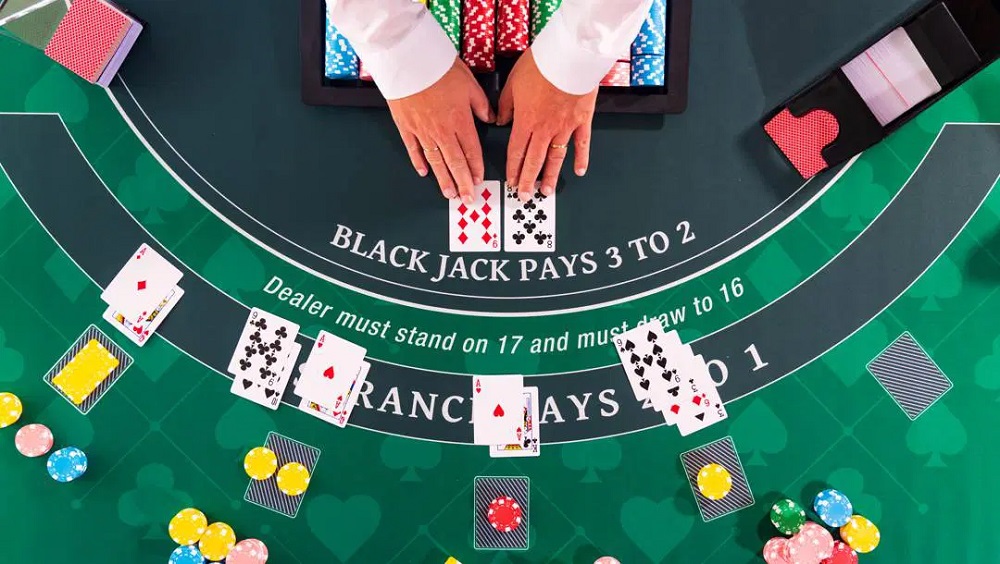
Blackjack has long stood as a favorite among casino table games due to its unique blend of skill, decision-making, and statistical transparency. When a player utilizes perfect basic strategy, the house edge can fall to less than 0.5 percent, making it one of the most mathematically favorable games on the casino floor. However, the slow, steady grind of traditional blackjack—where most wins pay out at even money or three-to-two—can sometimes feel mundane to players seeking massive, fast-paced payouts.
To inject high-volatility excitement into the classic card game, casinos introduced side bets. These are independent wagers placed alongside the main hand, focusing on specific card combinations rather than the simple goal of beating the dealer to twenty-one. While these optional wagers promise alluring payouts that can reach up to one hundred-to-one or higher, they alter the mathematical reality of the game. Understanding the risk, reward, and optimal approach to these wagers is essential for any player looking to navigate the blackjack table effectively.
The Mechanics and Appeal of Side Bets
Side bets are entirely separate from the primary blackjack wager. They are placed in a designated betting spot adjacent to the main betting circle before any cards are dealt. The outcome of the side bet is usually determined within the first few cards dealt, completely independent of whether the player’s main hand wins, loses, or pushes.
The core appeal relies heavily on the psychological thrill of high-yield rewards for a low initial stake. A player might feel frustrated risking twenty dollars to win twenty dollars on a standard hand, but the prospect of wagering an extra five dollars for a chance to win five hundred dollars creates a powerful incentive. This structural shift transforms blackjack from a low-variance, grinding game into a high-variance environment akin to slot machines or roulette.
The Mathematical Reality: House Edge Amplified
While the payouts on side bets are enticing, they come at a steep mathematical cost. The fundamental rule of casino gaming is that higher potential payouts carry a significantly larger house advantage. Traditional blackjack rewards disciplined strategy because the house edge is kept at an absolute minimum. Side bets, conversely, are designed to maximize the casino’s profit margins.
While a standard blackjack game boasts a house edge of under one percent, side bets routinely carry a house edge ranging from two percent to well over ten percent. From a pure capital-preservation standpoint, consistently placing side bets accelerates the rate at which the house chips away at a player’s bankroll.
Popular Blackjack Side Bets and Their Structures
Casinos offer dozens of unique side bets, but a few core variations have achieved global ubiquity. Each has its own distinct payout structure and specific card requirements.
21 Plus 3
This incredibly popular wager blends blackjack with three-card poker. The bet uses the player’s first two cards combined with the dealer’s face-up card to form a three-card poker hand. Payouts scale based on the rarity of the hand achieved:
-
Flush: Three cards of the identical suit, typically paying five-to-one.
-
Straight: Three cards in numerical sequence, such as a five, six, and seven, usually paying ten-to-one.
-
Three of a Kind: Three cards of the identical numerical rank but different suits, often paying thirty-to-one.
-
Straight Flush: Three cards in numerical sequence that also share the identical suit, paying forty-to-one.
-
Suited Three of a Kind: Three identical cards of the exact same rank and suit, which can reward players at one hundred-to-one.
Because this wager relies heavily on multiple decks, the house edge hovers around four percent to eight percent, depending on the exact payout table used by the casino and the number of decks in the shoe.
Perfect Pairs
The Perfect Pairs side bet focuses strictly on the first two cards dealt to the player. If those two cards form a pair, the bet wins. The payouts are categorized by how closely the two cards match:
-
Mixed Pair: A pair of the identical numerical value but different colors and suits, such as a jack of spades and a jack of hearts. This usually pays five-to-one or six-to-one.
-
Colored Pair: A pair of the identical value and color but different suits, like a four of diamonds and a four of hearts. This typically pays twelve-to-one.
-
Perfect Pair: Two identical cards of the exact same rank and suit, which is only possible in multi-deck games. This premium hand generally pays twenty-five-to-one or thirty-to-one.
The house edge for Perfect Pairs sits roughly between six percent and eleven percent, making it a highly volatile option.
Insurance
Though technically classified as a side bet, insurance is treated uniquely because it is built into the standard layout of almost every table. When the dealer’s upcard is an ace, players are invited to place an insurance bet equal to half their original stake. This bet pays two-to-one if the dealer reveals a ten-value card to complete a natural blackjack.
Mathematically, insurance is a poor wager for basic strategy players. In a standard shoe, the ratio of non-ten cards to ten-value cards does not justify a two-to-one payout. For non-card counters, the house edge on insurance sits at approximately seven percent.
Strategic Approaches to Side Bets
Given the mathematical disadvantages, a pure statistical purist would advise avoiding side bets entirely. However, players who choose to engage with them can utilize specific tactical frameworks to manage their risk profile.
Bankroll Segregation
Players who enjoy the excitement of side bets should view them as entertainment expenses rather than strategic vehicles. An effective approach is to separate the primary bankroll from the side bet bankroll. For instance, if a player allocates five hundred dollars for a session, they might dictate that no more than fifty dollars of that total will be used for auxiliary wagers. Once that side budget is exhausted, they return strictly to baseline blackjack.
Card Counting and Side Bet Vulnerability
Certain side bets become mathematically beatable for advanced players who employ card counting techniques. Because side bets like 21 Plus 3 or insurance depend on specific card distributions remaining in the shoe, tracking the ratio of high cards to low cards can signal when a side bet temporarily swings into the player’s favor.
For example, if a card counter notices that an unusual number of aces and ten-value cards remain in the deck, the mathematical probability of the dealer having a blackjack increases. In this specific scenario, taking the insurance bet ceases to be a sucker bet and becomes a statistically positive expected value move. Similarly, a shoe rich in specific suits can alter the viability of suit-based side wagers.
The Psychological Dynamic of the Table
Casinos deliberately design side bets to leverage human psychology. The visual layout of a modern blackjack table naturally draws the eye to the side bet circles, often displaying graphics of massive potential payouts.
Furthermore, social proof plays a massive role at a crowded table. When a fellow player hits a suited three-of-a-kind on a five-dollar bet and collects five hundred dollars, surrounding players experience a psychological phenomenon known as FOMO, or the fear of missing out. This collective excitement often prompts casual players to start placing side bets they had initially intended to avoid, disrupting their disciplined strategy.
Frequently Asked Questions
Does the number of decks used in a blackjack shoe affect the house edge of side bets?
Yes, the number of decks has a major impact on the mathematical probabilities of side bets. For wagers like Perfect Pairs or 21 Plus 3, which require identical cards or specific suits, adding more decks into the shoe increases the total number of identical card combinations available. A single-deck game makes a perfect pair literally impossible, whereas an eight-deck shoe provides ample opportunities. Casinos adjust their payout tables based on the deck count to ensure they maintain their desired house advantage regardless of the shoe size.
Why do some casinos offer different payout rates for the exact same side bet?
Casinos operate as independent businesses with varying profit targets and regulatory environments. A casino in a highly competitive tourist hub might offer a more generous payout table for 21 Plus 3 to attract a higher volume of players, resulting in a lower house edge. Conversely, a boutique casino or a cruise ship with a captive audience might lower the payouts for the exact same combinations, significantly raising the house edge because players have fewer alternative options. Always check the printed rules on the felt before wagering.
Can I place a side bet without actually playing a standard blackjack hand?
No, you cannot place a side bet as a standalone wager. Side bets are designed strictly as auxiliary options to the main game. To qualify for a side bet, you must first place a valid table-minimum bet in the primary blackjack circle. If you try to place chips only in the side bet area, the dealer will inform you that the wager is invalid. The main hand must be active for the side bet to be resolved.
What happens to my side bet if I decide to surrender my main blackjack hand?
The resolution of a side bet occurs almost immediately after the initial cards are dealt, well before the option to surrender becomes relevant in the flow of play. The dealer will evaluate and settle all active side bets right after inspecting their own upcard or confirming no natural blackjack exists. Because the side bet is already paid out or collected by the house in the opening sequence, surrendering your main hand later in the round has absolutely no retrospective impact on the side bet outcome.
Are side bet payouts subject to the same table limits as regular blackjack wagers?
Side bets feature their own independent limits, which are distinctly lower than the maximum limits applied to the primary blackjack hand. Because side bets offer high-ratio payouts like one hundred-to-one, casinos limit their maximum exposure to prevent a single lucky hand from causing a massive financial hit to the table’s bankroll. For instance, a table with a one-thousand-dollar maximum blackjack limit might restrict side bets to a maximum of twenty-five or fifty dollars per hand.
Is it possible to use a betting progression system like the Martingale on side bets?
Using a progressive betting system like the Martingale—where you double your wager after every loss—is highly dangerous when applied to side bets. Progression systems are designed for even-money wagers with near fifty-percent win probabilities. Because side bets are high-volatility events with incredibly low hit frequencies, a player attempting to double their side bet after consecutive losses will rapidly hit the table’s maximum side bet limit or completely deplete their bankroll long before the winning combination finally hits.

Comments are closed.